
In today’s rapidly evolving drone industry, NDAA compliant drones have become essential for government agencies, defense contractors, and critical infrastructure sectors. NDAA compliance refers to meeting the supply chain security requirements set forth by the National Defense Authorization Act (NDAA), a U.S. federal law that restricts the use of unmanned aerial systems (UAS) containing certain critical components sourced from covered foreign countries such as China, Russia, Iran, and North Korea. This legislation aims to protect national security by preventing foreign adversaries from accessing sensitive data through drones used by government agencies and other critical operators.
What Are NDAA Compliant Drones?
NDAA compliant drones are unmanned aircraft systems built with components and software free from prohibited sources identified in the NDAA. These critical components include flight controllers, radios, data transmission devices, cameras, gimbals, ground control systems, operating software, network connectivity, and data storage units. Compliance ensures that drones do not contain parts manufactured or controlled by entities in covered foreign countries, reducing regulatory risk and safeguarding sensitive operations from potential cyber threats.
The American Security Drone Act (ASDA) further extends these restrictions government-wide, requiring all federal agencies and contractors using federal funds to procure and operate only NDAA compliant drones starting in late 2025. This has led to increased adoption of secure systems across federal, state, and local levels, especially for public safety, infrastructure inspection, and defense missions.
Why NDAA Compliance Matters
Using NDAA compliant drones is critical for:
- Ensuring supply chain security and preventing unauthorized data access or espionage.
- Maintaining eligibility for federal funding and contracts, as non-compliance can lead to loss of grants or contract termination.
- Aligning with evolving state laws and agency policies that often mirror federal NDAA requirements.
- Supporting operational security in sensitive environments such as defense, homeland security, and critical infrastructure sectors.
Spotlight on Two NDAA Compliant Drones
ACSL SOTEN
The ACSL SOTEN, manufactured in Japan, is a standout National Defense Authorization Act (NDAA) compliant drone that exemplifies the highest standards of security and reliability in the industry. As an NDAA compliant system, it ensures that every critical component meets strict supply chain security requirements, making it a trusted choice for sensitive operations. This drone’s design reflects the growing demand for NDAA compliant technology among government agencies and defense contractors seeking to mitigate regulatory risk and maintain operational integrity compliant drone designed with security and compliance at its core. Its critical components are sourced exclusively from allied manufacturers, ensuring full adherence to U.S. security mandates.

The SOTEN features:
- AES-256 encrypted data transmission, safeguarding mission footage and telemetry.
- A modular camera system supporting interchangeable RGB, thermal, and multispectral payloads.
- A compact, foldable design for rapid deployment.
- Secure data storage and network connectivity to protect sensitive information.
The SOTEN has been adopted by various public safety agencies and infrastructure operators who require reliable, secure, and approved drone solutions compliant with NDAA standards. Its robust cybersecurity posture and versatile imaging capabilities make it ideal for law enforcement, fire departments, and critical infrastructure inspection missions.
Inspired Flight IF800 Tomcat
Another leading NDAA compliant drone is the Inspired Flight IF800 Tomcat, a modular quadcopter built for extended flight times and adaptable payload configurations.
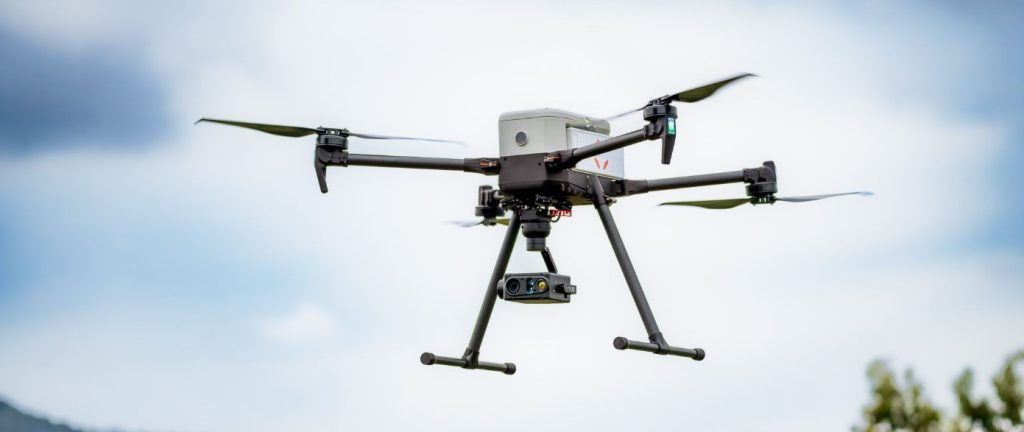
Key features include:
- Open architecture allowing users to swap sensors for mission-specific needs.
- Dual GNSS + RTK support for high-precision mapping and inspection.
- Full Blue UAS certification, indicating compliance with stringent Department of Defense cybersecurity assessments.
- Certification under Green UAS, making it suitable for commercial operators and federal civilian agencies.
The IF800 Tomcat is widely used by federal departments, defense contractors, and commercial operators in critical infrastructure sectors. Its flexibility and compliance make it a preferred choice for missions requiring secure data handling and operational reliability.
Conclusion
As drone regulations tighten, opting for NDAA compliant drones like the ACSL SOTEN and Inspired Flight IF800 is essential for organizations operating in sensitive environments. These platforms provide the security, compliance, and operational capabilities required to meet federal mandates and protect national interests. Whether for military use, public safety, or critical infrastructure inspection, choosing NDAA compliant drones ensures secure, reliable, and future-proof drone operations.